 Tupangishe
What is the Ideal Indoor Humidity Level for Your House?
Quick Summary
“The ideal indoor humidity level for a house is between 30% and 50%, and should never exceed 60%. Maintaining this balanced relative humidity range protects occupant health, prevents structural damage, prevents mold growth, and optimizes home energy efficiency across all seasons.”
Relative humidity plays a foundational role in maintaining a healthy, comfortable, and structurally sound residential environment. While temperature is often the first variable adjusted on a thermostat, atmospheric moisture levels dictate how that temperature is actually perceived by the human body. Neglecting indoor moisture levels can lead to a host of secondary complications, ranging from respiratory illness to costly structural degradation.
For most residential properties, building scientists and health organizations recommend maintaining an indoor relative humidity level between 30% and 50%. Any reading consistently below 30% is considered excessively dry, while readings exceeding 60% can trigger biological growth and structural issues. Striking the appropriate balance requires a basic understanding of building physics, regional climate influences, and active environmental management.
This comprehensive guide examines the science behind residential humidity, detailing its seasonal variations, physical effects on health and property, and the optimal tools and strategies required to maintain equilibrium in your home.
Understanding Relative Humidity and the Ideal Indoor Humidity Range
Relative humidity refers to the amount of water vapor present in the air compared to the maximum amount of moisture the air can hold at that specific temperature. Because warm air expands, it possesses a much greater capacity to retain water vapor than cold air does. This temperature-dependent relationship explains why indoor spaces can feel drastically different throughout the year, even when the absolute moisture content of the air remains unchanged.
The baseline target of 30% to 50% relative humidity is widely endorsed by the United States Environmental Protection Agency, alongside various international building performance institutes. Within this range, the air is moist enough to prevent the drying of skin and mucosal membranes, yet dry enough to inhibit the proliferation of biological pests. Keeping moisture within these boundaries also ensures that the home remains structurally stable, preserving wooden elements and finishes.
When relative humidity rises above 60%, the environment becomes highly conducive to the growth of mold, mildew, and dust mites. Conversely, when it drops below 30%, the dry air actively draws moisture from its surroundings, including human skin, respiratory tracts, wooden furniture, and structural framing. This ongoing cycle of drying and saturation highlights the necessity of maintaining a stable mid-range target.
Seasonal Adjustments for Indoor Humidity in Winter and Summer
The ideal indoor humidity level is not a static number that remains identical every month of the year. Instead, homeowners must adjust their targets in response to seasonal temperature fluctuations to prevent condensation and structural damage. Outdoor temperatures directly influence how indoor humidity behaves, especially when warm indoor air meets cold exterior wall surfaces and windows.
During the winter season, cold outdoor air holds very little moisture. When this dry air enters a heated home, its relative humidity plummets, often dropping below 20% if left unmanaged. While a 40% humidity level is generally comfortable, maintaining this level during extreme winter freezes can lead to excessive condensation on window glass and inside wall cavities. For this reason, building experts recommend lowering winter indoor humidity targets to between 30% and 40% when outdoor temperatures drop below freezing.
In contrast, summer conditions present the opposite challenge, as warm outdoor air carries high volumes of water vapor into the home. Air conditioning units naturally remove some moisture as they cool the air, but additional management is often required to keep humidity below the 50% threshold. Aiming for a summer range of 40% to 50% ensures comfort, reduces the load on cooling systems, and prevents the sticky, oppressive atmosphere common in poorly ventilated summer homes.
Physiological Effects: How Indoor Humidity Impacts Your Health
The moisture content of your home has a direct, scientifically documented impact on human physiology. When humidity is kept within the optimal 30% to 50% range, the body's natural respiratory defenses operate at peak efficiency. Deviations in either direction can quickly compromise physical comfort and worsen pre-existing health conditions.
Low humidity environments dry out the mucous membranes lining the nasal passages, throat, and bronchial tubes. This lack of moisture impairs the cilia, the tiny hair-like structures responsible for filtering out airborne pathogens, making individuals more susceptible to colds, influenza, and other respiratory infections. Additionally, dry air causes rapid evaporation of moisture from the skin and eyes, leading to persistent itching, contact lens discomfort, chapped lips, and flare-ups of eczema.
High humidity levels present a different set of biological hazards, primarily by encouraging the growth of indoor allergens. Dust mites thrive in environments where the relative humidity exceeds 50%, multiplying rapidly and releasing allergens that trigger asthma attacks and allergic rhinitis. High moisture levels also promote the growth of mold and fungi, which release airborne spores and volatile organic compounds that can cause chronic coughing, eye irritation, and severe respiratory distress in sensitive occupants.
Structural Consequences: Protecting Your Property from Moisture Imbalance
Just as humidity impacts human health, it also exerts continuous physical force on the materials used to construct your home. Wood is a highly hygroscopic material, meaning it naturally absorbs and releases moisture to stay in equilibrium with the surrounding air. When indoor humidity fluctuates excessively, wooden components undergo cycles of expansion and contraction that can cause permanent structural damage.
Persistent high humidity is particularly destructive to drywall, plaster, insulation, and timber framing. If relative humidity remains above 60% for extended periods, moisture can accumulate within wall cavities, leading to structural wood rot and the degradation of structural integrity. This excess moisture also causes paint to blister, wallpaper to peel, and can lead to the growth of dry rot, a severe fungal infestation that breaks down the structural fibers of domestic timber.
Low humidity, while less associated with rot, causes its own distinct forms of structural damage. As wood loses its moisture content during prolonged dry spells, it shrinks, warps, and cracks. This can manifest as gaps between hardwood flooring planks, loose joints in wooden furniture, creaking stairs, and even structural settling in timber-framed properties. Musical instruments, fine art, and books are also highly sensitive to dry conditions, often suffering irreversible damage when kept in arid indoor environments.
Regional Climates and Residential Humidity Standards
The practical challenges of managing indoor humidity vary significantly depending on geographic location and regional building practices. Homeowners in different parts of the world face distinct climate profiles that dictate whether they must primarily focus on humidifying or dehumidifying their living spaces.
In the humid southern regions of the United States, as well as coastal areas of Europe, outdoor humidity remains high for most of the year. Homes in these areas require robust air conditioning systems or dedicated whole-house dehumidifiers to draw out moisture and prevent mold. Conversely, in the arid southwestern United States, natural humidity is extremely low, making evaporative coolers or active humidifiers standard requirements for comfortable daily living.
In the United Kingdom and northern Europe, the prevailing maritime climate presents a unique set of challenges characterized by cool, damp winters. Many homes in these regions are older, brick-and-mortar structures that lack modern mechanical ventilation systems. These properties are highly prone to condensation and dampness, requiring careful manual ventilation, consistent space heating, and targeted dehumidifier use to keep indoor relative humidity within safe, healthy boundaries.
Measuring Your Indoor Environment: Tools and Methodologies
It is impossible to manage indoor humidity effectively without accurate data. Guessing based on personal comfort is unreliable, as temperature and drafts can distort your perception of moisture. Fortunately, monitoring indoor humidity is simple and inexpensive with the right equipment.
The primary tool used for this task is a hygrometer, a compact electronic device that measures both air temperature and relative humidity. Modern digital hygrometers are highly affordable and display real-time readings, often tracking historical high and low points. For comprehensive monitoring, it is beneficial to place multiple hygrometers throughout the home, particularly in moisture-prone areas like basements, kitchens, and bathrooms.
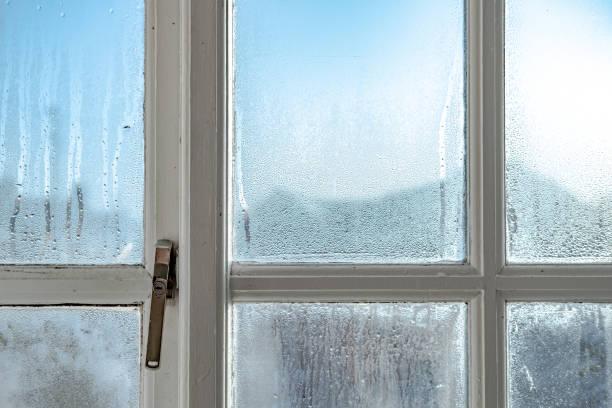
Many modern smart thermostats also include integrated humidity sensors that can communicate directly with heating, ventilation, and air conditioning systems. These systems can automatically adjust fan speeds, trigger dehumidification cycles, or activate whole-house humidifiers to maintain a preset target. For homeowners without these tools, a simple physical test involves observing window condensation; if ice or water droplets consistently form on double-paned glass, indoor humidity is likely too high for the current outdoor temperature.
Overview of Indoor Humidity Ranges and Their Practical Effects
To help visualize how different humidity levels affect your living space, the following table outlines the classifications, health impacts, and structural consequences associated with various relative humidity ranges.
| Humidity Range (%) | Classification | Health & Comfort Impact | Structural & Property Impact | Recommended Actions |
|---|---|---|---|---|
| Below 30% | Excessively Dry | Dry skin, respiratory irritation, increased viral survival. | Wood shrinkage, gaps in flooring, static electricity. | Introduce humidifiers; seal air leaks; reduce ventilation slightly. |
| 30% to 40% | Optimal (Winter) | Good comfort, minimal condensation on cold surfaces. | Stable wood structures, zero condensation damage. | Ideal target for cold winter months; maintain heating. |
| 40% to 50% | Optimal (Standard) | Ideal respiratory health, excellent overall comfort. | No mold risk, stable wood dimensions, preserved finishes. | Standard target for spring, summer, and autumn. |
| 50% to 60% | Elevated Moisture | Acceptable comfort, but elevated allergen activity. | Slight risk of condensation on cool basement walls. | Monitor closely; utilize ventilation fans; run air conditioning. |
| Above 60% | Excessively Humid | Sticky feeling, high dust mite and mold allergen exposure. | Mold growth, wood rot, peeling paint, musty odors. | Run dehumidifier; increase ventilation; repair water leaks. |
Actionable Methods to Elevate Low Indoor Humidity Levels
When winter weather or dry regional climates drop your indoor humidity below the critical 30% threshold, active steps must be taken to reintroduce moisture. Depending on the severity of the dry air, homeowners can choose between mechanical systems and simple lifestyle adjustments.
The most direct solution is the deployment of dedicated humidifiers, which fall into three primary categories:
- Ultrasonic Humidifiers: These devices utilize high-frequency metal diaphragms to vibrate water, creating a cool, fine mist that is quietly dispersed into the room.
- Evaporative Humidifiers: These systems use a fan to blow air through a wet wick or filter, naturally evaporating water into the air without risk of over-saturation.
- Steam Humidifiers: These units heat water to a boil, releasing warm steam into the living space, which can also help warm the room slightly.
For a permanent, low-maintenance solution, homeowners with ducted heating systems can install a whole-house bypass humidifier. This device plumbing-connects directly to the water supply and furnace ductwork, injecting moisture into the warm air stream before it is distributed throughout the home. Additionally, simple steps such as air-drying laundry indoors, keeping houseplants, and leaving the bathroom door open after a shower can assist in raising ambient humidity naturally.
Effective Strategies to Mitigate High Indoor Humidity Levels
Controlling excess moisture is vital for preventing structural rot and mold infestations. If your hygrometer consistently reads above 50% during the warmer months, you will need to implement mechanical and behavioral controls to dry out the indoor air.
Mechanical dehumidifiers are highly effective tools for extracting excess moisture from the air. In humid regions or damp basements, a portable compressor-based dehumidifier can draw in moist air, cool it to condense the water vapor into a collection bucket, and release drier air back into the room. For homes with central air conditioning, running the cooling system naturally lowers humidity because the cold evaporator coils pull moisture out of the air during the standard cooling cycle.
Behavioral adjustments also play a substantial role in moisture control. To keep humidity from accumulating in your living spaces, implement these practical daily habits:
- Use Extractor Fans: Always run exhaust fans in the kitchen while cooking and in the bathroom during and after hot showers.
- Cover Cookware: Keep lids on pots and pans while boiling water to prevent steam from escaping directly into the kitchen air.
- Inspect Appliances: Ensure your clothes dryer vents directly to the outdoors and check for any plumbing leaks under sinks.
- Improve Air Circulation: Open interior doors and run ceiling fans to promote continuous airflow, which prevents stagnant, damp pockets of air from forming.
Frequently Asked Questions About Ideal Indoor Humidity
Can high humidity cause mold to grow inside wall cavities?
Yes, if indoor relative humidity consistently exceeds 60%, warm moist air can penetrate dry wallboards and meet cold exterior framing surfaces. Once this moisture condenses inside the wall cavity, it creates a perfect environment for hidden mold growth, which can degrade insulation and damage wooden studs before becoming visible on the drywall surface.
What is the ideal indoor humidity level for sleeping comfortably?
For optimal sleep quality, most medical experts recommend keeping bedroom humidity levels between 40% and 50%. This range prevents your nasal passages and throat from drying out, while avoiding the sticky, warm feeling associated with high humidity, which can disrupt your body's natural temperature regulation during the night.
How does indoor humidity affect my heating and cooling energy bills?
Moist air holds heat better than dry air. In the summer, high humidity makes the air feel much hotter than it actually is, prompting you to set your air conditioner lower. In the winter, excessively dry air feels colder, causing you to run the heating system longer; maintaining a balanced humidity level allows you to feel comfortable at more energy-efficient thermostat settings.
Why does my house feel cold even when the heating is on?
This sensation is typically caused by low indoor humidity, which often drops below 25% during the winter. When the air is dry, moisture evaporates off your skin at an accelerated rate, which cools your body down through natural evaporative cooling, making you feel chilly despite a high thermostat setting.
How often should I calibrate or replace my home hygrometer?
Standard digital hygrometers should be calibrated annually to ensure accurate readings. You can perform a simple calibration check using the salt-test method in a sealed container, and if the sensor drifts significantly or is more than five years old, it is generally best to replace the unit to ensure reliable climate monitoring.
Maintaining Long-Term Humidity Balance in Your Home
Managing the relative humidity inside your house requires continuous attention, but the rewards are substantial. By keeping your indoor moisture levels consistently between 30% and 50%, you establish a living space that supports respiratory health, maximizes comfort, and reduces energy consumption. Regular monitoring with a basic hygrometer allows you to take proactive control of your environment, adjusting ventilation, heating, and specialized equipment as the seasons shift outside.
Ultimately, treating humidity management as a key component of home maintenance protects both your family and your physical property. Investing in proper ventilation, reliable dehumidifiers, or simple humidifying systems prevents minor atmospheric variations from turning into expensive structural repairs. By observing these standards, you ensure your home remains a safe, resilient, and comfortable sanctuary throughout the entire year.